On April 17, 2026, Anthropic Labs announced Claude Design — a new product that turns Claude into a visual creation partner. The idea is simple and ambitious at the same time: you describe what you want, and Claude delivers the first version of a design, prototype, deck or landing page. In a few minutes you can explore ten different directions before even opening Figma.
The announcement itself captures the pain that motivated the launch: "Even experienced designers have to ration exploration — there's rarely time to prototype a dozen directions, so you settle for a few." That's where Claude Design comes in, positioned as a way to give breathing room to those who already design, and to put real visual tools in the hands of people who never had them.
What Claude Design actually is
Claude Design is a visual creation environment running on top of Claude Opus 4.7, available in research preview for Pro, Max, Team and Enterprise subscribers at claude.ai/design. It covers everything from wireframes and clickable prototypes to pitch decks, marketing assets and code-powered pages — including advanced features like voice, video, shaders, 3D and embedded AI.
The most interesting differentiator is how it integrates into your world:
- Automatic design system: during onboarding, Claude reads your codebase and design files to bootstrap a custom system — with your brand's colors, typography and components already applied.
- Flexible inputs: you can start from a text prompt, upload documents (DOCX, PPTX, XLSX), point at your repository or capture elements from an existing site.
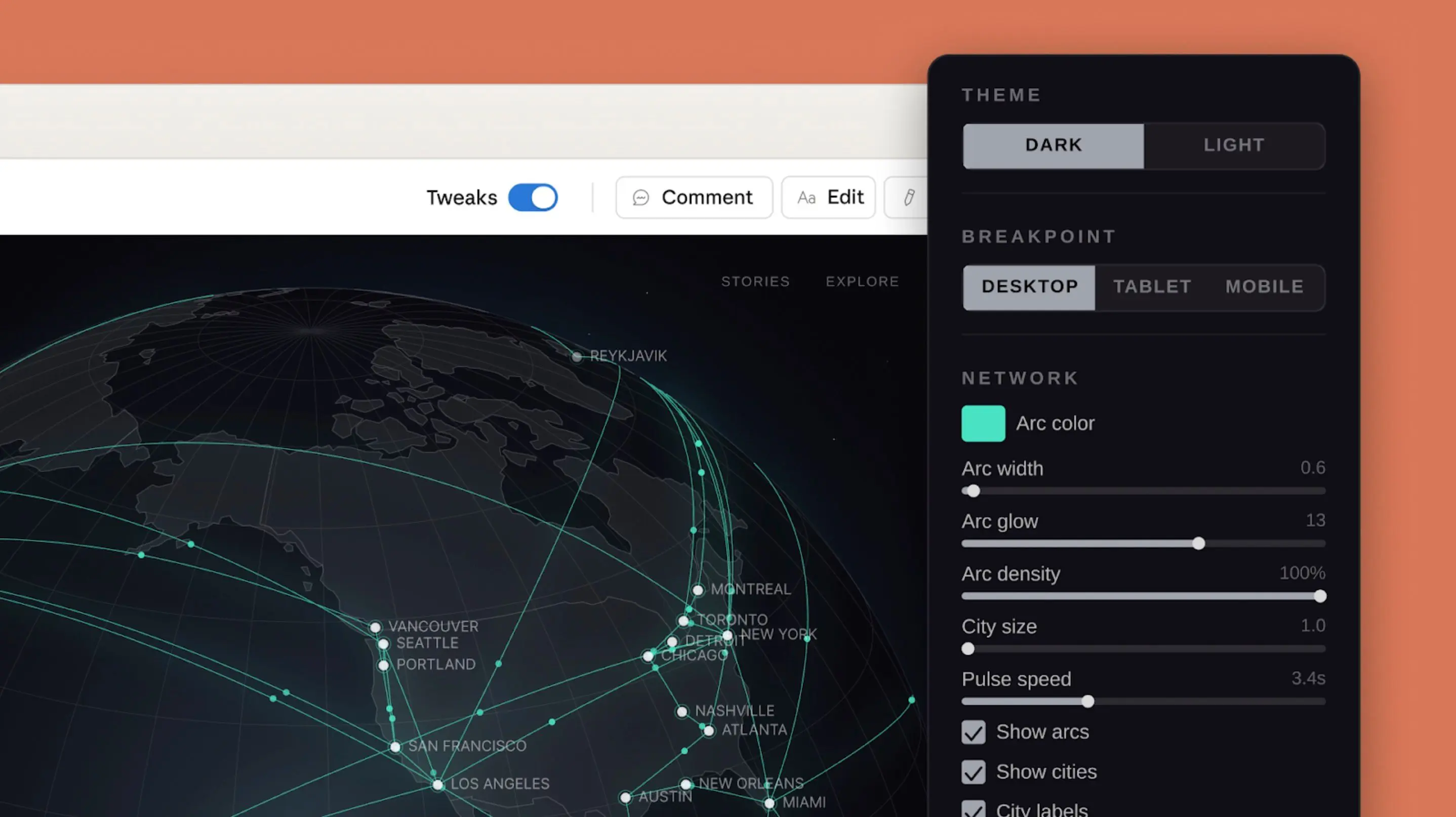
- Fine-grained refinement: inline comments on specific elements, direct text editing and live knobs to tweak spacing, color and layout in real time.
- Collaboration at scale: sharing across the organization with read or edit permissions.
- Open exports: internal URL, saved folder, Canva, PDF, PPTX or HTML.
- Direct handoff to Claude Code: designs become bundles ready for engineers to keep going without friction.
The numbers that turned heads
Two quotes from preview partners hint at the tool's practical impact:
- Olivia Xu, designer at Brilliant: pages that used to demand more than 20 prompts in other tools were resolved in just 2 prompts in Claude Design.
- Aneesh Kethini, product manager at Datadog: "What used to take a week now happens in a single conversation."
Canva also came in as a launch partner. Melanie Perkins, co-founder of the company, commented: "We're excited to build on our collaboration with Claude, making it simple to take ideas from Claude Design straight into Canva." In practice, that means a design made inside Claude can be refined in an editor most marketing teams already know.
Who this is a game changer for
Claude Design doesn't replace the senior designer — but it shifts two important things:
- It lowers the cost of exploring. Testing five directions stops being something that eats an entire sprint and becomes an afternoon conversation.
- It democratizes visual delivery. Product managers, founders, marketing folks and back-end developers can now produce prototypes and decks at reasonable quality without depending on a designer's calendar for every brief.
For product teams, the Claude Design + Claude Code combo closes an interesting loop: from brief to visual prototype, from prototype to delivery bundle, from bundle to production code — with far less manual translation between tools.
Worth a look
Anthropic published a short video showing Claude Design in action — worth the click to see the pace of the tool. The demo makes it clear that this isn't just a pretty mockup generator: it carries brand context, responds to fine adjustments and delivers something polished enough to leave the prompt screen and reach the team.
If you already subscribe to Claude Pro, Max, Team or Enterprise, just head to claude.ai/design and get started. On Enterprise accounts, an admin needs to enable access first.
What we're watching
Here at CloudScript, we're tracking this move by Anthropic closely — turning Claude into a work platform, first with Claude Code becoming an engineering companion, now with Claude Design entering the visual flow. For anyone working with DevOps, SRE and Platform Engineering, this goes beyond design: it's one more front where AI stops being an isolated feature and becomes part of the delivery pipeline.
If you'd like to talk about how to integrate tools like Claude Code and Claude Design into your development flow — including guardrails, cost control and best practices — reach out.